
Entitle February 2026 release notes
✨ Enhancements
Route approval workflows and notifications to Slack channels in a single thread
Slack channels can now be configured as approvers or notification targets in JIT approval workflows, allowing teams to review requests and coordinate decisions directly in Slack.
Notifications for each access request are consolidated into a single Slack thread, making it easier to follow the full decision history. Updates clearly show who approved a request, when it was approved, and how the request progressed, improving visibility and auditability for teams managing approvals in Slack.
For more information, see Approval workflows.
Deeper indirect access paths across AWS, Active Directory, and Google Workspace
Permissions views now display additional indirect access use cases across AWS, Active Directory, and Google Workspace, including access granted through nested groups, intermediary roles, or other inherited relationships. This ensures the permissions graph, entitlement views, and access reviews reflect effective access, not just direct assignments, giving admins a more accurate picture of who can access what across these integrations.
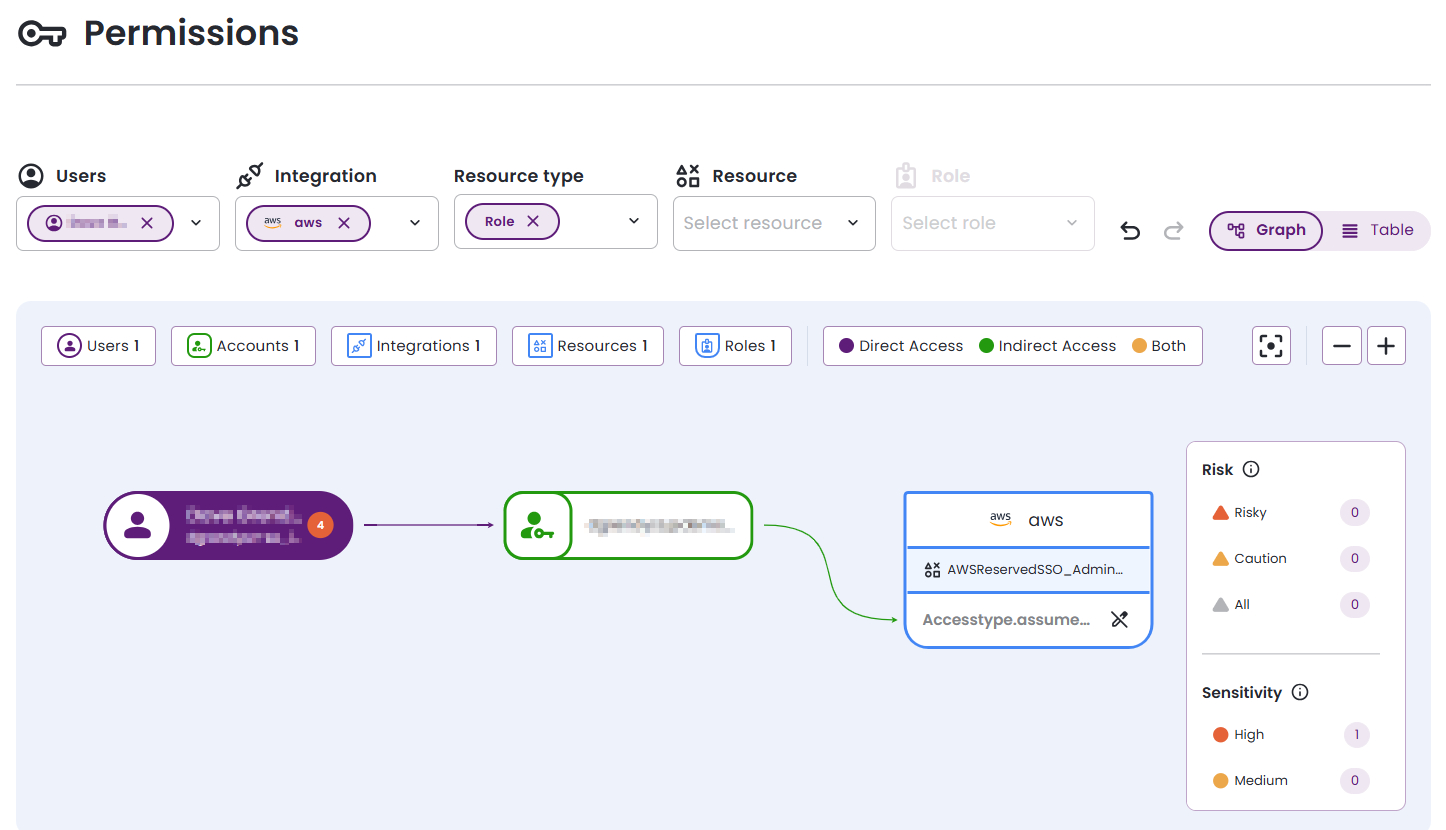
For information about the permissions graph, see The permissions graph.
Track Okta admin role changes through webhook events
The Okta integration webhook now supports additional events related to admin role changes. These include assignment and removal of predefined admin roles, as well as creation and deletion of custom admin role assignments through resource sets. This ensures changes to Okta administrative privileges are captured and processed more completely within Entitle.
For more information, see Okta webhooks.
Search and filter more efficiently across integrations, resources, roles and birthright policies
The Bulk Actions pages for integrations, resources, and roles now support search across workflows, owners, maintainers, IdP groups, and users, making it easier to find the correct items before applying updates. The Birthright Policies page also adds search and filtering, helping admins quickly locate and manage policies in larger or more complex environments.
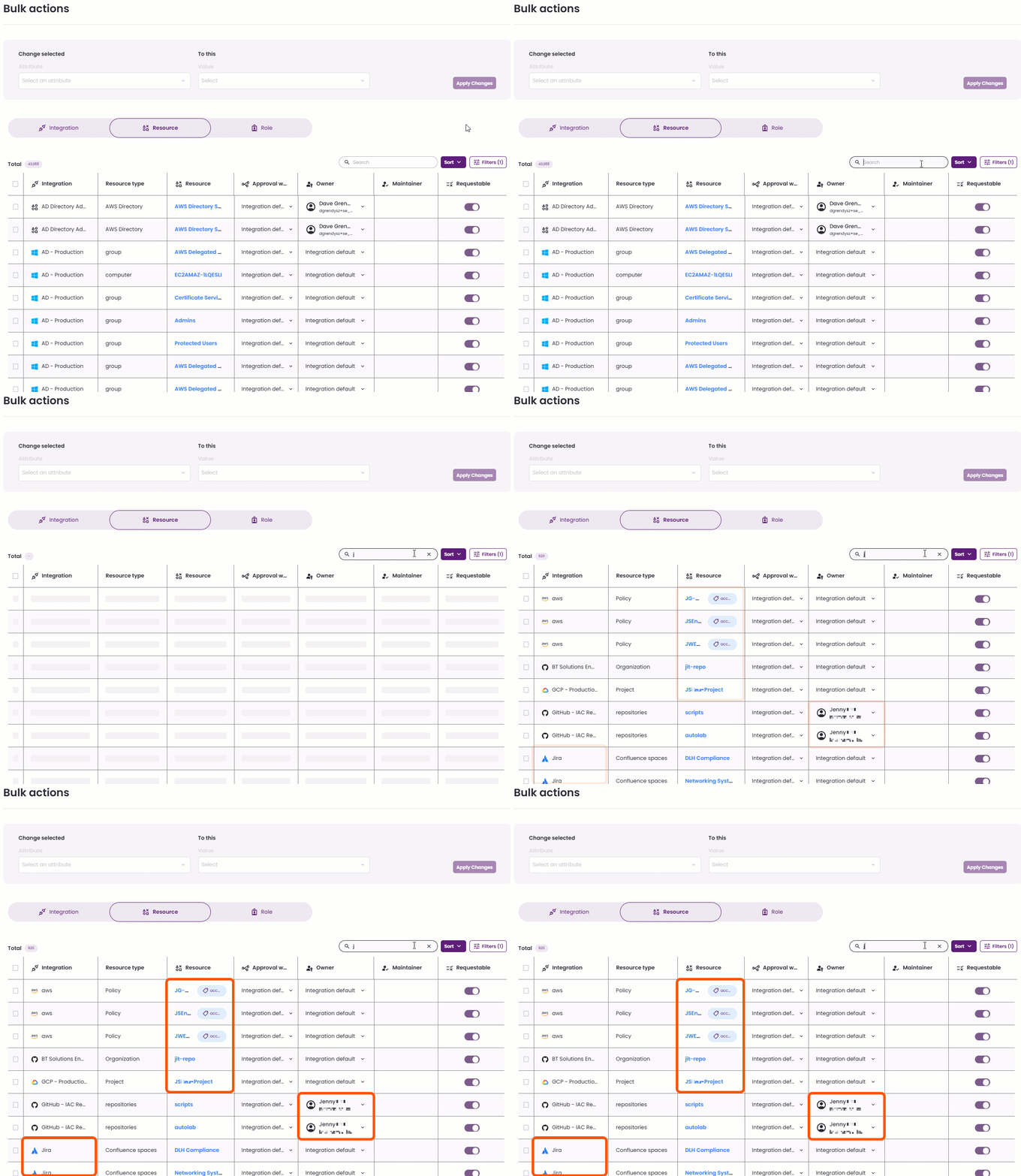
For more information, see Filtering and Bulk Actions and Birthright policies.
Connect Jamf to Entitle without disabling SSO
The Jamf integration now supports environments where SSO is enabled, using modern authentication flows instead of relying solely on basic authentication. Customers can connect Jamf to Entitle without disabling SSO, while maintaining their existing identity and security controls.
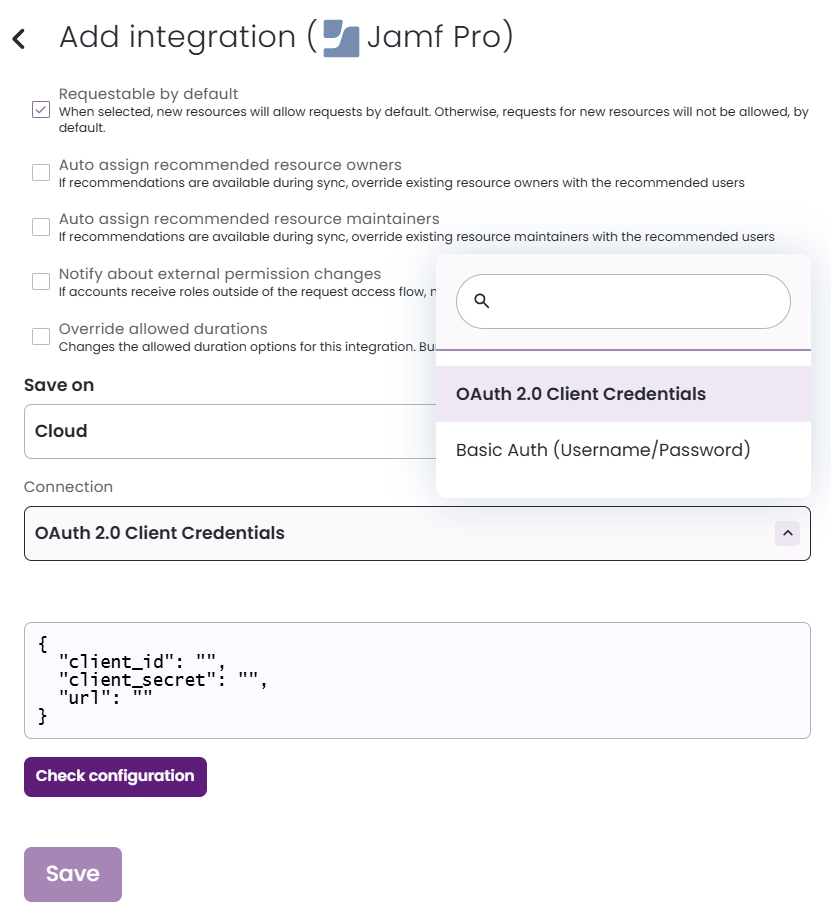
For more information, see Jamf Pro.
See only managed resources and roles when configuring virtual applications
The virtual integration resource and role picker now displays only managed resources and roles. By excluding unmanaged items and integrations without managed resources, the selection experience is cleaner and reduces the risk of misconfiguration.
For more information, see Virtual applications.
Create and review birthright policies with a more guided and flexible setup
The Birthright policy setup experience has been redesigned to be more structured and easier to review. You can now select roles across integrations, resources, and roles in a guided flow and view all selected roles in one place before creating the policy.
Bundles are now easier to understand and manage, with each bundle displaying its associated approval workflow and the number of roles it contains. This makes it clearer what access will be granted when adding bundles to a policy.
These changes make it easier to create, verify, and manage policies, especially in larger or more complex environments.
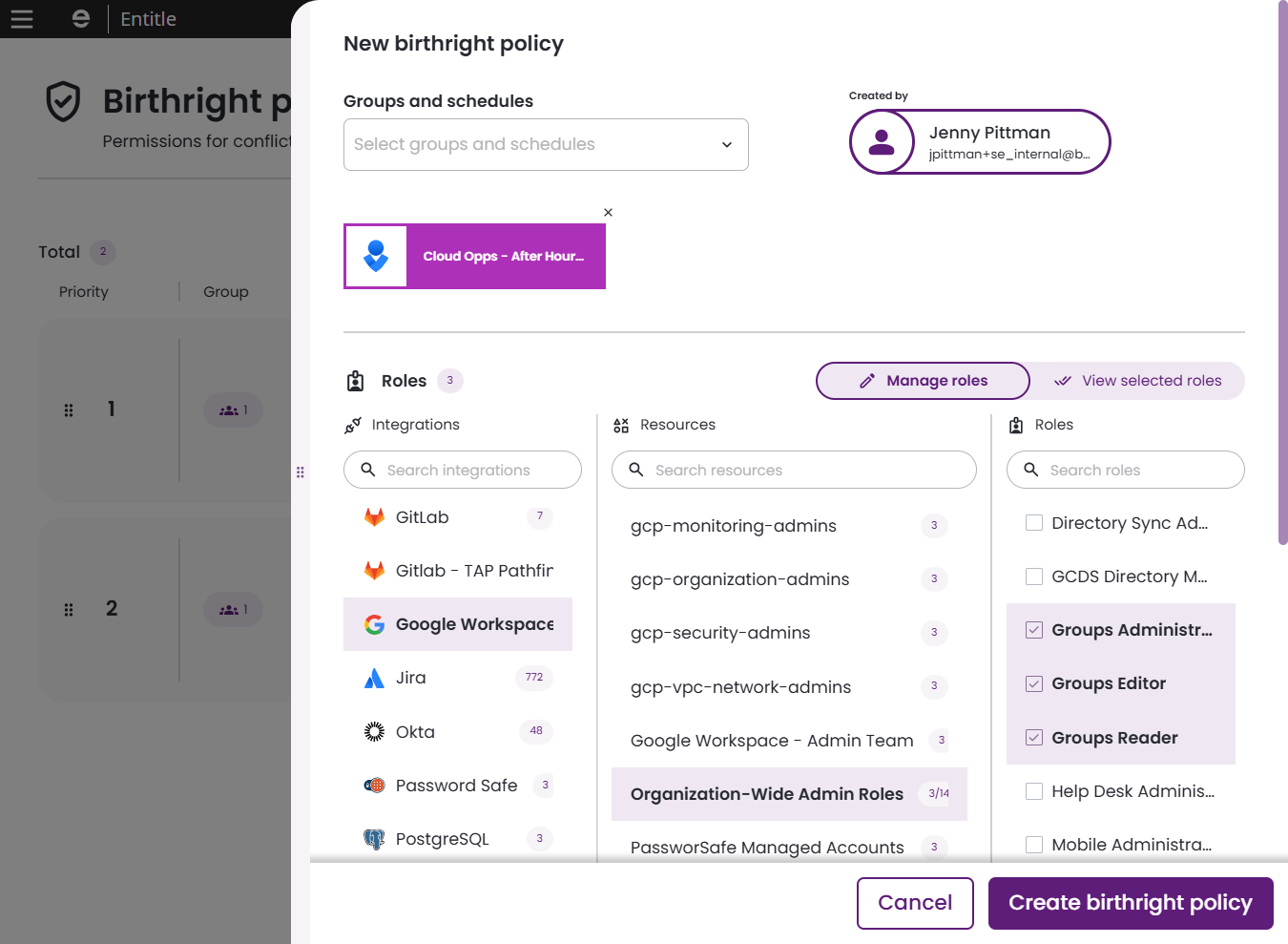
For more information, see Birthright policies.
📑 Documentation
Get clearer guidance when using Entitle public APIs
Entitle’s public API documentation has been expanded to provide clearer guidance on required and optional parameters, expected value formats, and edge cases. The updates also clarify how to obtain referenced IDs and how virtual or manual applications behave in different scenarios, making integrations smoother for API and Terraform users.
To see the updated documentation, see the API reference.
